
Protect Your Energy With Podcast Recording Boundaries
You started podcasting because you had something to say. Somewhere between the guest scheduling gymnastics and saying yes to every episode idea that pops into your head, the creative outlet turned into another obligation.
Nobody mentions this when you launch a podcast. Recording itself takes a couple of hours a week. The rest of the time (chasing guests, over-preparing, second-guessing your topic, feeling guilty when you skip a week) is where the burnout lives. If you want to protect your energy behind the mic, discipline alone won’t get you there. You need boundaries that hold up when the pressure to say yes shows up.
So build them.
Why Podcasters Struggle to Protect Their Energy
Podcasters are bad at boundaries, and the reasons make sense on the surface. You care about your topic, so everything feels worth covering. You are building an audience, so declining opportunities feels like sabotage. Recording looks easy compared to other work in your business (hit a button, talk into a mic, done). And because the work is creative, you tell yourself you should be able to do it whenever the mood hits.
Creative work needs stronger boundaries than most other work.
You can answer email when you are tired. You can sit through a meeting when you are distracted. Show up to a recording without energy, and everyone can hear it. Your questions lose curiosity. Your solo episodes ramble. The spark that made the show worth listening to in the first place is missing, and the audience notices.
Without recording boundaries, the pattern looks like this. You record when your brain is already fried. You say yes to guest pitches that do not fit the show. You over-prepare to the point of freezing, cancel episodes at the last minute, and eventually resent the show you were once excited about.
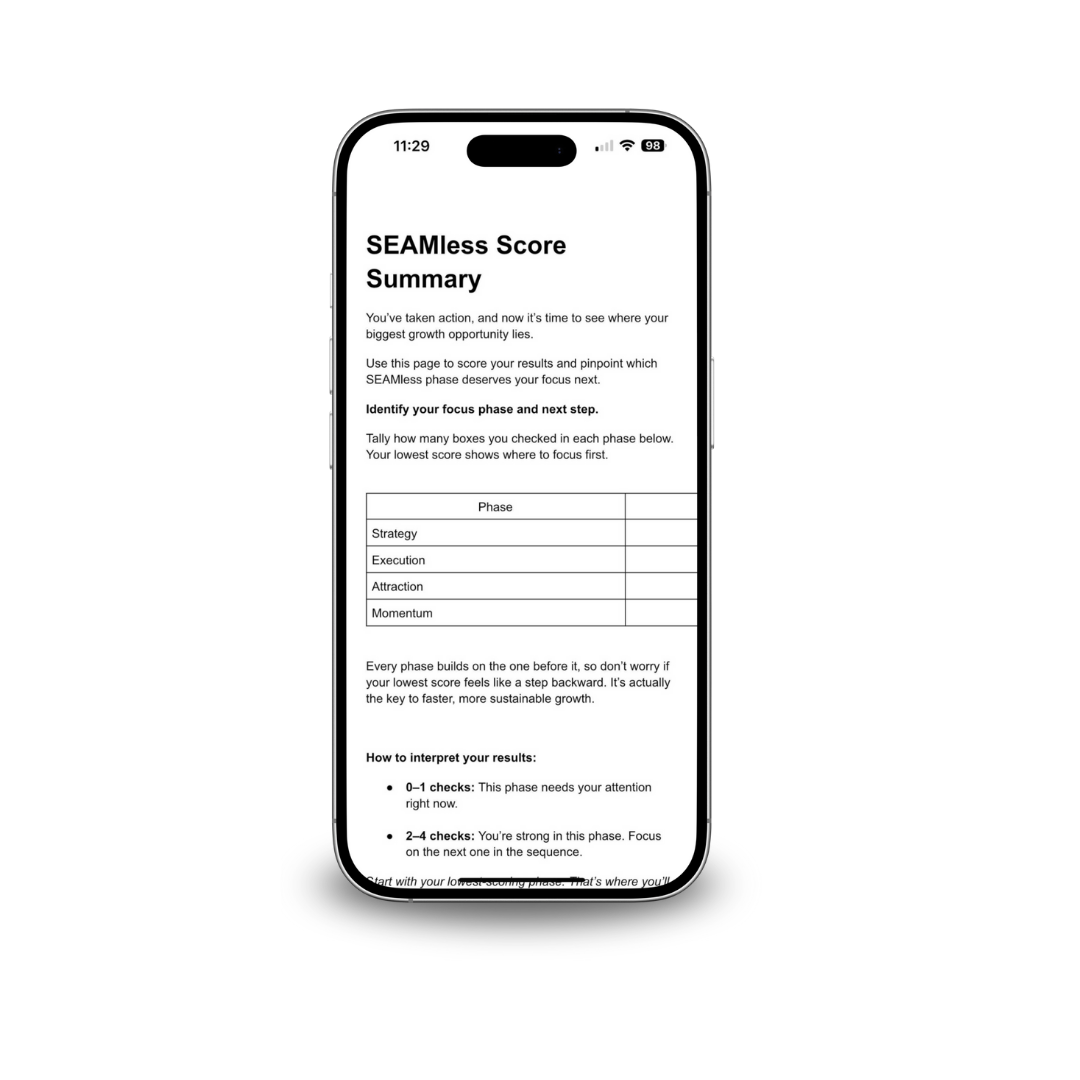
If any of that is landing hard, you might want more than boundaries. You might want a full framework for sustainable podcasting.

The Four Types of Boundaries That Protext Your Energy Behind the Mic
There are four areas where recording boundaries matter most: time, energy, content, and guests. Every podcaster needs some version of each, though the specifics look different depending on your format, life, and season.
1. Time Boundaris: When You Record and When You Don’t
Time boundaries are more than a calendar block. They protect your best creative hours by being honest about when you can actually show up sharp.
Without them, you record whenever you can squeeze it in. Late at night when you are fried, early morning before coffee, or a lunch break after a mentally draining meeting. Then you wonder why the episode feels off.
Your recording time is not neutral. A Tuesday morning session when you are rested is a different piece of content than a Friday evening session at the end of a long week. The quality of the work is tied to when you do it.
There is another layer. Boundaries train the people around you (guests, collaborators, family) to treat your recording time as real work. When your availability reads as whenever, people treat it accordingly.
Set boundaries around:
Recording windows: pick your days and times and hold them. “I record Tuesday and Thursday mornings” is easier to defend than “whenever I can fit it in.” Block those windows on your calendar the way you would block a client call.
Session length: cap it and hold the cap. If sessions run past two hours regularly, either there wasn’t enough prep done or the format needs a rework. Long is a different thing than good.
Lead time: set a minimum notice window for scheduling. Something like 48 hours is reasonable. Most urgent requests are somebody else’s planning gap, which is not yours to absorb.
Time zones: if you interview across zones, decide which windows you will take. Someone else’s 9am being your 6am does not obligate you to that call.
Action step: look at your last ten recording sessions. When did you feel sharp? When did you drag? Only schedule future recordings in the good windows. Fewer episodes recorded at your peak beats a weekly cadence you resent.
2. Energy Boundaries: Protecting Your Creative Capacity
Podcast tasks don’t all require the same energy. Recording asks for your best self. Editing does not. Show notes and social scheduling don’t either. Most podcasters treat them the same and end up depleted for no good reason.
Creative energy isn’t unlimited. You do not get a fresh tank every morning because you slept. If your morning included a hard conversation, a packed meeting schedule, or a family crisis, you don’t automatically have full creative capacity at 2pm because that is when you booked the recording.
Energy boundaries mean being strategic about what comes before and after the recording. It means acknowledging that some tasks drain you more than others. It means knowing how many quality sessions you have in a week and stopping when you hit that number.
This is where podcasters trip up. You look at the calendar and see three free hours. Feels efficient to record three episodes back-to-back. Is the third episode as sharp as the first, or are you grinding through because you are trying to get ahead?
Set boundaries around:
Pre-recording activities: no draining tasks right before you record. A hard client conversation, a performance review, or an emotional call with a family member all carry into the mic whether you want them to or not.
Number of episodes per session: recording four back-to-back is possible. Recording four back-to-back well is another story. Most podcasters can do two quality sessions before their energy starts to fade. Some can only do one. Know your number.
Recovery time: block buffer time after sessions. Do not jump straight into email or another demanding task. Fifteen minutes of nothing helps. Schedule it like it is required, because it is.
Decision fatigue: make episode decisions (topic, format, guest, questions) on a different day than you record. Figuring out what you are talking about while you are talking about it is a good way to burn out.
For example, an interview host can usually do two guests in a day before questions start feeling repetitive. A long-form deep-dive host might be capped at one. Know your ceiling.
3. Content Boundaries: What You Will and Won’t Talk About
You don’t owe your audience every corner of your life, every opinion you hold, or every area of expertise you have ever built. Some topics cost more than others emotionally, mentally, or in the aftermath you have to manage.
Content boundaries are the boundaries podcasters resist most. It feels like it limits the show, but it does the opposite. Being clear about what you will not cover strengthens what you do cover. When you try to be everything to everyone, you dilute your expertise and exhaust yourself keeping up on topics that are not your core focus.
This is about making conscious choices about where your creative energy goes. Every episode on a topic that drains you is an episode you did not record on something that lights you up.
Some topics cost too much. Maybe you covered a hard personal chapter on the show and the response was great, but every time you revisit it you re-live it. Maybe your expertise sits in territory that is now politically charged, and every episode brings hate mail. Maybe you launched the show for topic X but keep getting pulled into topic Y because it is adjacent. You are allowed to say no to any of it.
Set boundaries around:
Personal disclosure: decide in advance what is on the table and what is off limits. Family details, health, finances, relationships. Choose consciously, not in the moment when a good story tempts you to overshare. You cannot un-publish episodes.
Scope creep: your podcast has a lane. Requests to cover tangentially related topics may look harmless, but they dilute your positioning and eat your bandwidth. “That is outside my focus” is a full sentence.
Controversial topics: you can engage difficult subjects without engaging every angle of every debate. Decide which hard conversations you will wade into. Every issue does not require your take.
Emotional cost: if a topic drains you every time (even if it performs well, even if listeners love it), you are allowed to retire it. High engagement does not obligate you to keep bleeding for the content.
The test: if you dread recording an episode, pause and ask why. Sometimes it is normal resistance before hard work, and you push through. Sometimes it’s your gut telling you this crosses a line you need to hold, and listen to. The difference is how you feel after. Energized means push through, and depleted means the boundary was real.
4. Guest and Interview Boundaries: Who You Talk To and How
If you host an interview show, guest management is where recording boundaries fall apart fastest. Guests feel like they are doing you a favor by showing up, so podcasters let guests run the show. Please hear me on this. That is a mistake.
You are the one providing the platform, doing the prep, editing the episode, and putting it in front of your audience. The value trade is mutual. Treating guests well does not mean letting them ignore your process or show up unprepared.
Something most podcast coaches will not say out loud? Not every guest who wants to be on your show should be. Some pitch themselves because they have a book to sell, not because they have anything to say to your audience. Others look great on paper and land not so well in the actual conversation.
Without guest boundaries, you end up with half-prepared guests giving surface-level answers, rambling conversations that take hours to edit, no-shows and reschedules you have to work around, and episodes you dread publishing because you know they are not good.
Set boundaries around:
Vetting: everyone who pitches your show is not automatically a fit. Build criteria. Do they have relevant expertise? Are their values compatible with yours? Will your audience care about this conversation? If the answer to any of those is no, decline politely. You are not running a public service. You are running a show.
Prep expectations: tell guests exactly what to expect before they say yes. Recording length, format, whether questions come in advance, equipment they need, how much prep time. Require a pre-interview questionnaire. Require a tech check for remote recordings. If they cannot follow basic instructions before the interview, they will not be sharp during it.
In-session behavior: you can end an interview early if someone is unprepared, disrespectful, or wildly off-topic. Forty-five minutes of a bad recording does not need to be published to spare feelings. “I don’t think this is the right fit for my show” is a complete answer. End it, do not publish it, move on.
Post-recording requests: guests do not get to dictate publish dates, demand editorial control, or ask for content changes to the transcript. Set expectations upfront. Most problems come from unclear expectations, not difficult people.
Script this. Create a standard response for guest inquiries with your process built in. “Thanks for reaching out. Here is what being a guest looks like: [recording length, prep requirements, timeline, format]. If that works, here is my scheduling link.” Filter people before they land on your calendar.

How to Enforce Your Boundaries (The Hard Part)
Setting boundaries is the easy part. You read a post like this, nod along, maybe write yours down. Then someone asks for an exception and you give in.
Enforcing them is where the real work happens. It gets uncomfortable and people push back. You feel guilty, and then you second-guess yourself. All of that is normal, but it’s important for you to do it anyway.
Communicate Clearly
People don’t know your boundaries by osmosis. What feels obvious to you is invisible to everyone else until you say it plainly.
State your boundaries in writing and repeat them. Put them on your guest booking page. Include them in confirmation emails, and reference them when people pitch. Make them impossible to miss.
Boundaries that live only in your head are wishes.
Example language:
- “I record Tuesdays and Thursdays, 9am to 12pm EST.”
- “I book guests two weeks in advance minimum. No last-minute recordings.”
- “Episodes run 45 minutes. We start and end on time.”
- “I don’t cover [topic] on this show. Here is a podcast that does.”
Notice what is missing. Apologies. Justifications. “Unfortunately.” “I’m sorry but.” “I wish I could but.” State the boundary like a fact, because it is one.
Stop Apologizing for Them
Your boundaries don’t need justification. You do not owe anyone an explanation for declining a 7pm recording, saying no to a guest who does not fit, capping your sessions at one, or taking a break from the show.
“That doesn’t work for my schedule” is a complete sentence. “That’s outside my show’s scope” needs no elaboration. “I don’t do that” requires no defense.
Every apology signals the boundary is negotiable. Every over-explanation invites debate. State it clearly and move on. The people who respect your boundaries will not need the explanation, and the people who demand one were going to push back anyway.
Build In Consequences for Yourself
If you keep violating your own boundaries, then they are not real. You need stakes that make it hurt to break them.
Cancel or reschedule recordings when you are exhausted, rather than pushing through and publishing a mediocre episode. Don’t publish episodes that crossed your content boundaries, even if you already recorded them. Un-invite guests who steamroll your process (yes, you can do this). Take unplanned breaks when you need them.
The rule is straightforward. Protecting the boundary has to matter more than any single episode. If it does not, the boundary will crumble the first time someone pushes.
Every time you cross your own line to avoid disappointing someone else, you teach yourself the line doesn’t matter. Every time you hold it under pressure, you reinforce that it does.
Script Your No
Write templated responses for the boundary violations you see most often. When you get caught off guard, you say yes to things you should decline. Pre-written responses take the decision out of the moment.
For bad timing: “My recording schedule is [days and times]. Here is my calendar link to find a time inside those windows.”
For scope creep: “That’s a good topic and outside what I cover on this show. I recommend checking out [other podcast that covers it].”
For unprepared guests: “The prep materials help us have a better conversation. Let’s reschedule for [date] once you have had a chance to review them.”
For last-minute requests: “I need [X amount of time] notice to prepare properly for recordings. My next available slot is [specific date two-plus weeks out].”
Save the templates in your notes app or email drafts. When a boundary gets tested, pull the template and send. Do not deliberate. Do not customize. Do not soften.
What Happens When your Boundaries Get Tested (They Will)
Once you actually set recording boundaries, especially if you have been operating without them, this is what happens.
People push back. “Can’t you make an exception this once?” You feel guilty, because you are used to saying yes and holding a line feels mean. You second-guess yourself. Am I being too rigid? Am I too difficult to work with?
Somebody will call you unprofessional or inflexible. Usually the person who benefits most from you not having boundaries. Hold anyway.
The people who respect your boundaries are the ones you want to work with.
They appreciate the clarity and follow your process without complaint. They show up ready because you told them what to expect.
The ones who don’t respect your boundaries were going to drain you eventually. The guest who pushes back on your two-week booking window was going to show up unprepared. The collaborator who rolls their eyes at your recording schedule was going to demand exceptions later. You are filtering out bad opportunities earlier in the process.
Every time you violate your own boundary, you teach people it is negotiable. Every time you hold it (even when it is hard, even when someone is annoyed, even when you feel guilty), you reinforce that it is real.
The discomfort of holding a boundary is temporary. The exhaustion of not having any is permanent. And that exhaustion is where months-long disappearances from your own show come from.

The Boundaries That Might Surprise You
A few less obvious boundaries worth considering:
- Recording seasons: four to six weeks entirely off between seasons. That means the show goes quiet on the feed and out of your head for a month or more. Sounds scary until the show you come back to is sharper than the one you left.
- No back-to-back recording and publishing: always schedule at least a week between recording an episode and publishing it. Gives you distance to edit objectively and catch things you missed too close to the mic.
- Outsourcing what drains you: if editing kills your energy, hire it out. If guest outreach exhausts you, batch it quarterly with a VA. If show notes feel like torture, find someone who actually enjoys that work. Some tasks are not worth your creative energy even if you can technically do them.
- The “hell yes or no” rule: if you are not excited about a guest, topic, or collaboration, it is an automatic no. Lukewarm episodes waste everyone’s time. Yours. The guest’s. The audience’s attention span.
- Recurring topics only: some podcasters run a set rotation of themes and refuse to deviate. Removes decision fatigue entirely and lets you go deep instead of broad.
Your boundaries will look different depending on your format, energy patterns, and life. The point is not to copy someone else’s list. The point is to have some at all.
Building Boundaries Into Your Recording Process
Make boundaries structural, not aspirational. Do not rely on willpower or remembering in the moment. Build them into the system so following the boundary is easier than breaking it. (This is where strategy becomes essential. Boundaries without systems to support them fall apart fast.)
In your scheduling system:
Block recording times on your calendar as unavailable to everyone else. Not tentative. Not flexible. Blocked. Set your booking calendar to only show approved time slots so guests cannot even request times outside your boundaries. Add buffer blocks before and after sessions automatically. Turn off notifications during recording windows and hold that.
In your guest process:
Create a guest guide document with expectations and your process spelled out. Use a screening form to filter guests before they get to booking. If someone will not fill out a five-question form, the won’t prep for the actual interview. Include all your boundaries in confirmation emails so nobody can claim they did not know.
In your content planning:
Keep a “no” list of topics you won’t cover, no matter how trending they are. Set episode length limits in the planning stage and hold them in editing. Decide format in advance (solo, interview, panel), so you are not making that call when you are already depleted. Plan breaks into your publishing schedule from the start. Don’t wait until you are burnt out to take time off.
In your recording space:
Claim physical space for recording, even if the space is a corner with a “recording in progress” sign. Train household members on your recording hours and what that means for noise and interruptions. Build a pre-recording ritual that signals to your brain that work has started (same beverage, same playlist, a quick review of the notes). Keep equipment accessible but separate from your daily life space where possible.
What Good Boundaries Look Like
Sustainable podcasting with real recording boundaries in place feels like this in practice.
You look forward to recording days rather than dreading them. Your calendar shows when you record with white space around it. You say no to opportunities that don’t fit the show without guilt. Your episodes feel more aligned because you are recording with something in the tank, and you don’t need months-long recovery breaks because you never hit empty.
People respect your process because you respect it first. Guests show up prepared because you require prep, and collaborators work around your schedule because it is clear and consistent. Your audience gets better episodes because you are protecting the energy that makes them worth listening to.
You have a life outside the podcast. Recording is part of your week without monopolizing the whole week.
That is what recording boundaries produce over time. A show that stays sustainable while your business grows.
Create Your Own Recording Boundaries
Start here. You don’t need to implement everything at once.
This week, identify the biggest energy drain around recording. Not five things. One. Name the specific boundary that would protect against it. Communicate that boundary to one person who needs to know it. Defend it once when it gets tested.
This month, map out your ideal recording schedule (specific days, times, and a defined session length). Be realistic, not aspirational. Update your booking and scheduling tools to reflect only those times. Write templated “no” responses for your three most common boundary violation requests, and use them when the requests come in.
This quarter, audit which episodes drained you over the past ninety days. Look for patterns in topic and guest type, and note what else was going on around those sessions. Adjust your content boundaries based on what you find. Build recovery time into your process as a non-negotiable piece of the workflow. Evaluate what is working and what needs to shift. Boundaries evolve as you do.
Your boundaries will change. The podcast you have now is not the podcast you will have in a year. Energy patterns shift as life circumstances change, and the show’s focus evolves alongside your business. Your boundaries should grow with you, not stay static.
The goal is to have boundaries at all and be willing to adjust them as you learn what you actually need.
Protect Your Energy Behind the Mic
Your creative energy is not unlimited. Every yes to recording at the wrong time, with the wrong person, on the wrong topic, or in the wrong headspace costs something.
It costs the sharpness of your questions and the enthusiasm behind your solo episodes. Over time it costs your ability to keep showing up week after week.
Good recording boundaries make sure you have the energy to keep making the show you set out to make. Go protect yours.
Need help actually building these podcast recording boundaries?
Setting them is one thing. Holding them when everything in you wants to say yes is the hard part. That is a big piece of what I do.
I help podcasters figure out which boundaries they actually need (not the ones that sound good on a Threads post), build them into a podcast workflow that supports the show, and hold them when it gets uncomfortable. Let’s figure out what protecting your energy looks like for your show.

Meet Leah
I help entrepreneurs build podcasts that grow their business with strategy, support, and less overwhelm.
I'm looking for...